The Government’s New National Scheme of Delegation – A Shift Toward Officer‑Led Planning
June 15, 2026






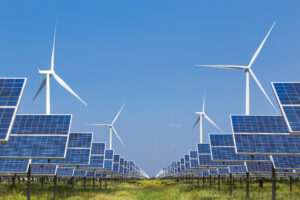










With energy storage technology developing rapidly and costs falling, battery storage represents a fantastic diversification opportunity for landowners looking for alternative ways of generating additional income, particularly as the Basic Payment Scheme phases out over the coming years.
Battery storage together with solar opportunities are very much driven by the government targets as they look to reduce the carbon footprint in the move towards net zero. Battery storage works by capturing and storing energy generated from renewable technologies or they can work independently of renewable source by storing energy from the grid.
The principles are straightforward:
This option may not be for everyone, but where it is viable it can provide an additional source of income into a farming business without a wide scale change in farming practice.
The site area requirement is minimal and often two or three acres is sufficient. Leasing land for battery storage is paid on a rent per megawatt in the region of £1,800 per mega-watt, providing a potential income of £25,000-£30,000 per acre.
The key to opening a battery storage opportunity is the grid connection and whether there is access to the sub-station. Once this has been identified the sub-station must have capacity to accommodate a site.
Where to start:
Berrys is successful in advising clients on energy projects and able to help with the initial processes that must take place for the site and projects to be viable. We have the expertise to support landowners to ensure that they achieve the best deal in relation to energy storage projects together with solar parks.
To find out more about the opportunities that may be available, please contact Chris Jones (Shrewsbury) on 01743 267063 or Jon Stables (Kettering) on 01536 532378.